
Utah Dark Sky Compliance: How to Install Beautiful Landscape Lighting That Protects Our Night Skies
- Custom Fit Lighting

- Feb 16
- 14 min read

Utah is blessed with some of the most spectacular night skies in the United States. From the internationally recognized Dark Sky Parks in Moab and Bryce Canyon to the star-filled skies visible from suburban backyards along the Wasatch Front, our state's celestial views are truly breathtaking. However, these natural wonders face an increasing threat from light pollution, making dark sky-compliant landscape lighting more important than ever.
As Utah homeowners increasingly invest in outdoor lighting to enhance their properties' beauty, safety, and security, there's a growing responsibility to do so in ways that protect our remarkable night skies. The good news is that you don't have to choose between stunning landscape lighting and environmental stewardship—with proper design and installation, you can have both.
At Custom Fit Lighting, we're committed to creating landscape lighting designs that illuminate your property beautifully while respecting Utah's precious dark sky resources. In this comprehensive guide, we'll explore what dark sky compliance means, why it matters specifically in Utah, and how you can achieve gorgeous outdoor lighting that preserves our ability to see the stars.
Understanding Dark Sky Compliance and Light Pollution
Before diving into specific solutions, it's important to understand what we mean by "dark sky compliance" and why light pollution has become a significant concern in Utah and across the nation.
What is Light Pollution?
Light pollution occurs when artificial light is used inefficiently, excessively, or inappropriately, creating unwanted brightness that obscures our view of the night sky. It comes in several forms:
Sky Glow: The brightening of the night sky over populated areas, creating that orange or gray haze visible above cities
Glare: Excessive brightness that causes visual discomfort and can actually reduce visibility
Light Trespass: Light that spills beyond property boundaries, shining into neighbors' windows or yards
Clutter: Excessive groupings of bright, confusing light sources
In Utah, light pollution has increased dramatically over the past few decades as the population has grown, particularly along the Wasatch Front corridor from Ogden to Provo. What was once a reliable stargazing region has seen diminishing night sky quality, threatening not just our view of the cosmos but also wildlife, human health, and energy efficiency.
What Does Dark Sky Compliance Mean?
Dark sky compliance refers to lighting practices that minimize light pollution while still providing adequate illumination for safety, security, and aesthetics. Dark sky-compliant lighting follows principles established by organizations like the International Dark-Sky Association (IDA), which include:
Using fully shielded fixtures that direct light downward rather than allowing it to escape upward or sideways
Employing appropriate light levels rather than overlighting
Utilizing warm color temperatures (typically 3000K or lower) that minimize blue light emission
Installing controls like timers, dimmers, and motion sensors to reduce unnecessary lighting
Choosing the right fixture for each specific application
These principles form the foundation of responsible outdoor lighting that protects our night skies while still meeting practical needs.
Why Dark Sky Compliance Matters in Utah
Utah's commitment to preserving dark skies isn't just about aesthetics—it's about protecting an invaluable natural resource that impacts our environment, economy, health, and quality of life.
Utah's Dark Sky Legacy
Utah is home to numerous Dark Sky Places certified by the International Dark-Sky Association, including:
Natural Bridges National Monument (the world's first International Dark Sky Park)
Dead Horse Point State Park
Goblin Valley State Park
Hovenweep National Monument
Cedar Breaks National Monument
Arches National Park
Canyonlands National Park
Capitol Reef National Park
Bryce Canyon National Park (one of the best stargazing locations on Earth)
These designations represent not just recognition but also responsibility. They attract tourists from around the world who come specifically to experience Utah's pristine night skies, contributing significantly to our state's economy. Protecting these resources requires conscientious lighting practices not just within park boundaries but throughout our communities.
Environmental Impact
Light pollution doesn't just affect human stargazers—it has profound impacts on Utah's wildlife and ecosystems:
Birds: Artificial light disrupts migration patterns, with millions of birds dying annually from collisions with illuminated structures
Insects: Nocturnal insects are drawn to lights, disrupting pollination, food chains, and ecosystem balance
Wildlife: Animals including deer, elk, and smaller mammals experience disrupted natural behaviors when artificial light invades their habitats
Plant Life: Excessive nighttime light can interfere with plant growth cycles and seasonal behaviors
Utah's diverse ecosystems, from high mountain forests to desert lowlands, are particularly sensitive to these disruptions.
Human Health Considerations
Research increasingly shows that excessive artificial light at night affects human health by disrupting circadian rhythms, potentially contributing to sleep disorders, mood disturbances, and other health issues. Blue-rich light (common in many LED fixtures) is particularly disruptive to our natural sleep-wake cycles.
Energy and Economic Benefits
Light pollution represents wasted energy. Every photon that escapes upward into the sky or spills beyond where it's needed is energy (and money) wasted. Dark sky-compliant lighting is inherently more efficient, reducing energy consumption and operating costs while minimizing environmental impact.
Regulatory Landscape
Several Utah communities have enacted lighting ordinances that require or encourage dark sky-friendly practices. While regulations vary by municipality, the trend is clearly toward greater protection of night sky resources. Working with a professional landscape lighting company utah homeowners trust ensures your installation complies with local requirements while exceeding minimum standards.
Key Principles of Dark Sky-Compliant Landscape Lighting
Creating beautiful landscape lighting that protects dark skies requires understanding and applying specific design principles. These aren't restrictions that limit your options—they're guidelines that lead to more sophisticated, effective lighting designs.
Principle 1: Shield All Light Sources
The single most important aspect of dark sky compliance is using fully shielded fixtures that prevent light from escaping upward into the night sky. This doesn't mean your lighting will be dim or ineffective—it means light is directed exactly where you want it rather than wasted illuminating the sky.
Fully shielded fixtures have opaque housings that completely cover the light source, with light emitted only downward or at angles below horizontal. These fixtures eliminate upward light while often providing better illumination of intended targets because all the light is directed where it's needed.
What to Avoid: Unshielded or partially shielded fixtures, globe lights that emit light in all directions, uplights aimed at steep angles, and any fixture where the bulb is visible when viewed from the side or above.
What to Choose: Path lights with integrated shields, well lights with deep housings and proper louvers, downlights for structures and trees, wall-mounted fixtures with full cutoff designs.
Custom Fit Lighting exclusively uses fully shielded, dark sky-compliant fixtures in our installations. We believe this isn't just good environmental practice—it results in better lighting that looks more natural and professional.
Principle 2: Use Appropriate Light Levels
More light doesn't equal better lighting. In fact, overlighting is one of the primary contributors to light pollution and often produces less attractive results than carefully planned, moderate lighting.
Dark sky-compliant design uses the minimum light level necessary to achieve the desired effect, creating contrast and drama rather than attempting to replicate daylight conditions. This approach not only reduces light pollution but also:
Creates more visually interesting nightscapes with depth and dimension
Allows eyes to adapt naturally to darkness, improving visibility
Reduces glare and harsh shadows
Minimizes energy consumption
Extends fixture and bulb life
Professional Landscape Lighting Installation in Utah focuses on strategic illumination of key features rather than flooding entire areas with light. This targeted approach achieves better aesthetic results while respecting dark sky principles.
Principle 3: Choose Warm Color Temperatures
The color temperature of light significantly impacts both its visual quality and its environmental impact. Color temperature is measured in Kelvins (K), with lower numbers representing warmer (more amber/orange) light and higher numbers representing cooler (bluer/whiter) light.
For dark sky compliance, warm color temperatures of 3000K or lower are strongly recommended, with 2700K being ideal for most residential applications. Here's why:
Environmental Impact: Cooler, blue-rich light scatters more in the atmosphere, creating more sky glow. It's also more disruptive to wildlife and human circadian rhythms. Warm light minimizes these negative effects.
Visual Quality: Warm light appears more natural and inviting in outdoor settings, complementing Utah's natural landscapes rather than creating harsh, clinical appearances. It enhances the warm tones of stone, wood, and vegetation common in our region.
Glare Reduction: Warm light produces less glare than cool light at equivalent brightness levels, improving visibility while reducing discomfort.
At Custom Fit Lighting, we typically specify 2700K LED fixtures for residential landscape applications. This color temperature closely resembles traditional incandescent light, creating warm, welcoming outdoor spaces that look beautiful while meeting dark sky standards.
Principle 4: Implement Smart Controls
Even the best fixtures can contribute to light pollution if they're on when they're not needed. Dark sky-compliant lighting incorporates controls that ensure lights operate only when and where necessary:
Timers: Automatically turn lights off during late-night hours when they're not needed. Most households don't need landscape lighting after midnight, yet many systems run all night unnecessarily.
Dimmers: Allow you to reduce light levels for different occasions and needs. Lower settings during quiet evenings reduce light pollution while still providing adequate illumination.
Motion Sensors: Activate lights only when activity is detected, perfect for security applications and seldom-used pathways. This dramatically reduces operating hours while maintaining safety.
Astronomical Timers: Adjust automatically based on sunset/sunrise times, ensuring lights turn on only during actual darkness rather than operating unnecessarily during extended summer twilight.
Zoning: Divide your system into multiple zones that can be controlled independently, allowing you to illuminate only the areas currently in use.
These controls not only support dark sky compliance but also significantly reduce energy consumption and operating costs. Custom Fit Lighting designs all systems with appropriate controls tailored to each client's needs and usage patterns.
Principle 5: Light Only What Needs to Be Lit
This principle seems obvious but is frequently violated in landscape lighting installations. Every fixture should have a specific purpose and target. If you can't articulate what a particular light is illuminating and why, you probably don't need that fixture.
What Should Be Lit:
Pathways for safe navigation
Steps and elevation changes
Entry points for security and welcoming ambiance
Specific architectural features you want to highlight
Specimen trees or special landscape elements
Outdoor living areas when in use
What Shouldn't Be Lit:
Large expanses of lawn or groundcover
Entire tree canopies illuminated from multiple angles
Blank walls or uninteresting surfaces
Neighbors' properties or shared views
The sky itself
This selective approach creates more dramatic, interesting lighting while minimizing light pollution and energy waste. Professional designers understand how to achieve impact through strategic lighting rather than comprehensive illumination.
Dark Sky-Compliant Lighting Techniques for Utah Properties
Now that we understand the principles, let's explore specific techniques for implementing dark sky-compliant landscape lighting in various applications common to Utah properties.
Path and Walkway Lighting
Path lighting serves critical safety functions while being prone to dark sky violations when done incorrectly. Many conventional path lights use globe or lantern styles that emit light in all directions, including upward into the sky.
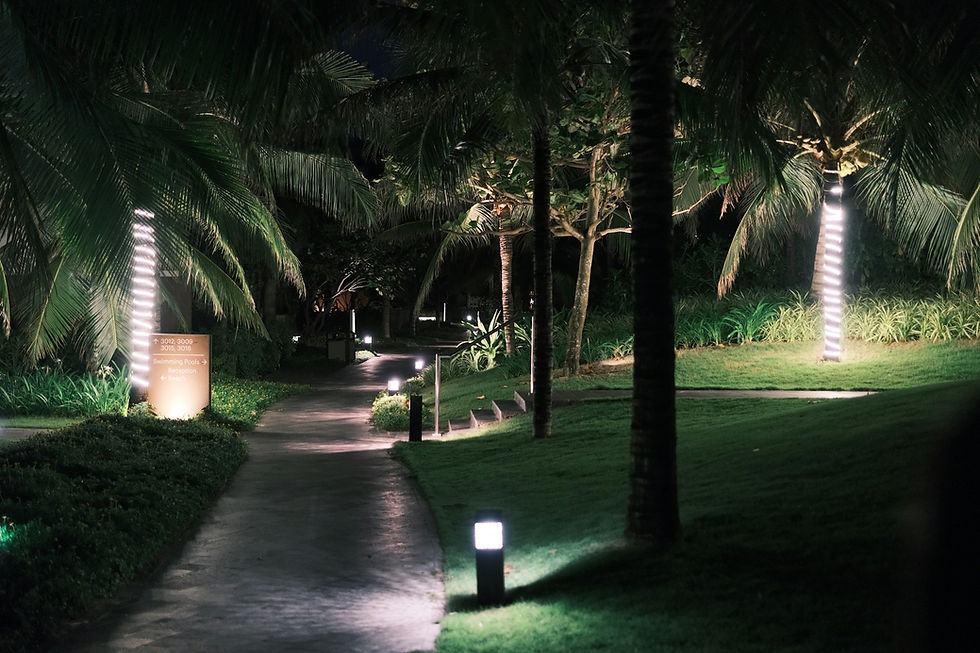
Dark Sky Solution: Use low-profile path lights with integrated shields that direct light downward and forward along the path. Position fixtures slightly behind the path edge rather than in the center, spacing them 8-10 feet apart. Use lower-wattage LEDs (typically 3-5 watts) that provide adequate illumination without overlighting.
The result is safer, more attractive pathway lighting that eliminates light trespass and sky glow. Your paths will be clearly visible without creating glare or disturbing neighbors.
Architectural Lighting
Highlighting your home's architectural features adds dimension and curb appeal, but uplighting can violate dark sky principles if not carefully controlled.
Dark Sky Solution: Use well lights with deep housings, proper baffles, and narrow beam spreads positioned close to walls. This keeps light on the intended surface rather than allowing it to spill upward. For columns, corners, and other vertical elements, position fixtures to illuminate only the lower two-thirds of the feature, allowing the top to fade naturally into darkness.
Consider downlighting from eaves and overhangs as an alternative to uplighting. Recessed soffit lights provide dramatic architectural emphasis while directing all light downward in perfect dark sky compliance.
Tree and Landscape Lighting
Utah's mature trees—from native cottonwoods and oaks to ornamental varieties—deserve lighting that showcases their beauty without creating light pollution.
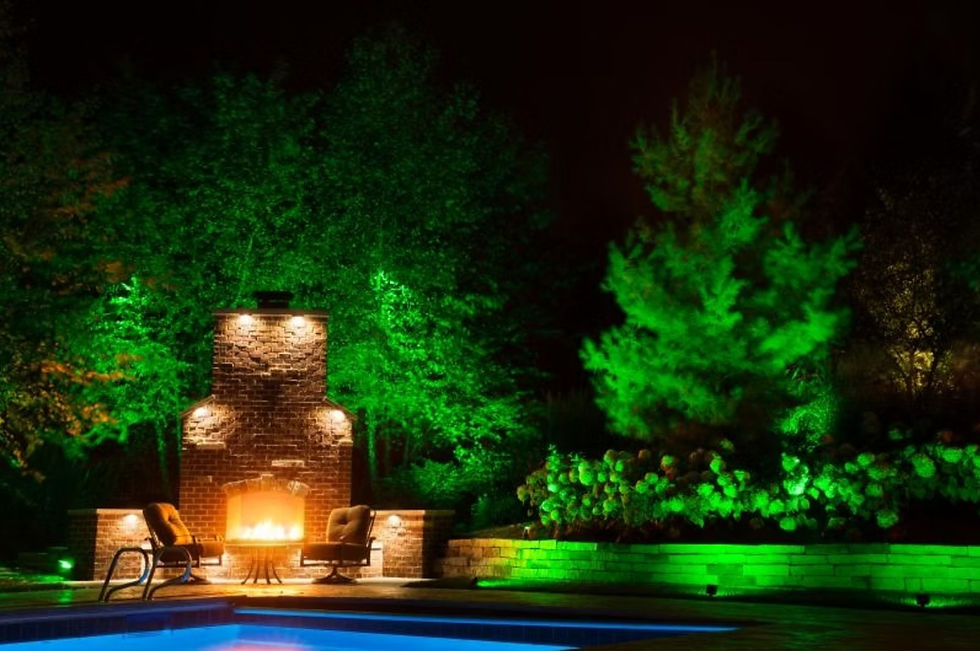
Dark Sky Solution: Rather than placing multiple uplights around a tree's perimeter (a common mistake that illuminates the entire canopy and creates significant upward light), use a single well-positioned uplight with a narrow beam at the tree's base. This creates dramatic shadows within the canopy while keeping light contained within the tree's structure.
For shorter ornamental trees and large shrubs, consider downlighting from nearby structures or tall fixtures instead of uplighting. This creates natural-looking illumination that mimics moonlight while directing all light downward.
Always use shielded well lights rated for in-ground installation, positioned with proper drainage to prevent water accumulation—particularly important in Utah's freeze-thaw cycles.
Water Feature Lighting
Ponds, fountains, and waterfalls are popular landscape elements in Utah properties. Lighting them requires special attention to dark sky principles since water can reflect light in unintended directions.
Dark Sky Solution: Position lights below or behind water features rather than in front. Submerged lights should be aimed carefully to keep light contained within the water volume. Use narrow beam angles and minimal wattage to create shimmer and movement without excessive brightness.
For fountains and waterfalls, lighting from below the water surface creates beautiful effects while keeping light directed downward. Avoid lighting that shines across water surfaces, as this creates glare and wastes light through reflection.
Outdoor Living Spaces
Patios, decks, and outdoor kitchens require functional lighting for activities while respecting dark sky principles.
Dark Sky Solution: Prioritize downlighting from structures, pergolas, and overhead elements. Recessed deck lights, step lights, and under-counter lighting provide necessary illumination while directing all light downward. String lights, if used, should feature shielded bulbs that direct light downward rather than traditional exposed bulbs.
Consider dimmable systems that allow you to adjust light levels based on activities. Lower levels for quiet evenings create ambiance while reducing light pollution; higher levels when needed for cooking or entertaining provide adequate task lighting.
Security and Accent Lighting
Security lighting often conflicts with dark sky principles when implemented as bright floodlights that illuminate wide areas and create significant light pollution.
Dark Sky Solution: Replace traditional floodlights with narrow-beam fixtures positioned to illuminate specific areas like doors and pathways. Add motion sensors so lights activate only when needed. Consider lower-wattage lights that provide adequate visibility without creating glare that actually reduces security by obscuring intruders.
For accent lighting of special landscape features, use focused beams on specific subjects rather than attempting to illuminate entire areas. A single well-positioned fixture highlighting a beautiful rock formation or sculpture makes more visual impact than flooding the surrounding area with light.
Working with a Dark Sky-Compliant Lighting Professional
While dark sky principles may seem straightforward, implementing them effectively requires expertise, experience, and access to appropriate products. This is where working with a professional landscape lighting company makes a critical difference.
Design Expertise
Professional lighting designers understand how to achieve your aesthetic and functional goals while adhering to dark sky principles. They can visualize how light will behave in your specific landscape, accounting for architectural features, vegetation, hardscaping, and neighboring properties.
Custom Fit Lighting's design process includes comprehensive site assessment, discussion of your priorities and concerns, creation of a detailed lighting plan showing fixture locations and specifications, and nighttime demonstrations that allow you to see and approve the design before final installation.
Product Selection
Not all outdoor lighting fixtures are dark sky compliant, and many products marketed as such don't perform as advertised. Professional installers work with manufacturers who produce genuinely compliant products tested and proven in real-world conditions.
At Custom Fit Lighting, we exclusively specify fixtures from manufacturers committed to dark sky principles. We've tested these products in Utah's challenging climate and know they'll perform reliably while meeting environmental standards.
Proper Installation
Even the best dark sky fixtures can fail to perform as intended if improperly installed. Fixture angles, positioning, burial depth, wire connections, and drainage all affect long-term performance and compliance.
Professional installation ensures fixtures are positioned at correct angles, properly shielded, and securely mounted to maintain alignment over time—particularly important in Utah where freeze-thaw cycles and ground movement can shift improperly installed fixtures.
System Integration
Dark sky compliance often depends on controls and system integration. Professional installers design systems with appropriate zoning, controls, and dimming capabilities that allow you to reduce light levels and operating hours without sacrificing functionality.
Ongoing Support
Landscapes change as plants grow and properties evolve. Professional companies provide ongoing support, adjusting fixture positions as needed, replacing components that fail, and ensuring your system continues to meet dark sky standards over time.
The Custom Fit Lighting Commitment to Dark Skies
At Custom Fit Lighting, we believe protecting Utah's night skies isn't just an environmental responsibility—it's an opportunity to create better, more sophisticated lighting designs that enhance our clients' properties while preserving the natural beauty that makes our state special.
Our commitment to dark sky principles is evident in every project we undertake:
100% Dark Sky-Compliant Fixtures: We use only fully shielded, properly rated fixtures that meet or exceed IDA guidelines. We don't offer products that contribute to light pollution, even
if clients request them—we educate about better alternatives instead.
Warm Color Temperature Standard: All our installations use 2700K-3000K warm white LEDs that minimize environmental impact while creating inviting, natural-looking illumination.
Strategic Lighting Design: We focus on thoughtful, targeted illumination rather than overlighting. Our designs achieve impact through carefully planned contrast and emphasis, not through excessive brightness.
Comprehensive Controls: Every system we install includes appropriate timers, dimmers, zoning, or smart controls that allow clients to minimize operating hours and light levels when full illumination isn't needed.
Education and Advocacy: We educate clients about dark sky principles and advocate for lighting practices that protect our shared night sky resources. We're proud to be part of Utah's broader effort to preserve one of our most valuable natural assets.
Local Expertise: As a Utah-based company, we understand the specific considerations relevant to our state's ecosystems, climate, and regulatory environment. We stay current with local lighting ordinances and best practices specific to our region.
Beyond Compliance: Creating Truly Exceptional Dark Sky Lighting
Meeting minimum dark sky standards is important, but our goal at Custom Fit Lighting is to exceed them, creating lighting that not only complies with guidelines but actively contributes to protecting Utah's night skies.
This means going below maximum light levels rather than using the maximum allowed brightness. We design with lower light levels that still achieve desired effects, creating more dramatic, interesting lighting while further reducing light pollution.
We help clients identify what truly needs illumination and what doesn't, often reducing fixture counts below what clients initially expected while delivering superior results. By using premium fixtures with superior optics and light distribution, we achieve better results with fewer, lower-wattage fixtures than would be possible with bargain products.
We design systems with excess transformer capacity and appropriate infrastructure to accommodate future expansion without requiring system replacement, reducing long-term waste and resource consumption. Beyond dark sky compliance, we prioritize overall environmental responsibility in product selection, installation practices, and system design.
Take Action: Protect Utah's Night Skies While Beautifying Your Property
Whether you're planning a new landscape lighting installation or looking to upgrade an existing system to dark sky compliance, Custom Fit Lighting is here to help you achieve beautiful, functional outdoor lighting that respects our precious night sky resources.
For New Installations:
Contact us for a complimentary consultation where we'll assess your property, discuss your goals, and create a comprehensive dark sky-compliant lighting plan tailored to your specific needs. You'll receive a detailed proposal showing fixture locations, specifications, and expected results, along with information about controls and system operation.
For Existing Systems:
If you have landscape lighting that isn't dark sky compliant, we can assess your current system and recommend upgrades or modifications. Often, simple fixture replacements or repositioning can dramatically improve dark sky compliance while enhancing overall lighting quality. We can work within your existing infrastructure in many cases, making upgrades more affordable than you might expect.
Educational Resources:
Beyond our installation services, Custom Fit Lighting is committed to educating Utah homeowners about dark sky principles and responsible outdoor lighting. We're happy to provide information and guidance even if you're not ready for a full installation project.
Your Role in Protecting Utah's Night Skies
Every lighting decision made by Utah homeowners collectively impacts the quality of our night skies. By choosing dark sky-compliant landscape lighting, you're not just improving your own property—you're contributing to a broader effort to preserve one of Utah's most remarkable natural resources for future generations.
The stars that inspired ancient peoples, guided explorers, and continue to captivate observers worldwide are still visible above Utah—but only if we make conscious choices to protect them. Dark sky-compliant landscape lighting allows you to enjoy beautiful, functional outdoor illumination while ensuring those stars remain visible for your children, grandchildren, and beyond.
Experience the Custom Fit Lighting Difference
At Custom Fit Lighting, we're proud to be Utah's leader in dark sky-compliant landscape lighting. Our expertise, commitment to quality, and dedication to environmental stewardship set us apart in an industry where cutting corners is far too common.
When you choose Custom Fit Lighting, you're choosing a company that prioritizes environmental responsibility alongside aesthetic excellence. Our designers understand how to create stunning lighting while respecting dark sky principles. We use premium, fully compliant fixtures proven to perform in Utah's challenging climate, backed by installation expertise that ensures long-term reliability and compliance.
You'll receive ongoing support from a local company invested in our community's future. Ready to illuminate your property beautifully while protecting Utah's night skies? Contact Custom Fit Lighting today for your complimentary dark sky-compliant lighting consultation. Let's work together to create outdoor lighting that enhances your property while preserving the starry skies that make Utah truly special.
Your landscape lighting can be both beautiful and responsible. With Custom Fit Lighting, you don't have to compromise—you can have exceptional outdoor illumination and dark sky compliance. Reach out today and discover how we can transform your property while protecting the night skies we all treasure.
Comments